the complete guide

What is Astaxanthin?

It’s the only antioxidant that works
in water and fat at once,
which is why it reaches what others can’t.
Reviewed by  Dr Ron Goedeke    ·   NZ functional medicine physician, 25 yrs   ·   Every claim sourced inline
Astaxanthin is the only antioxidant that works in the watery and fatty parts of a cell at the same time. That property, more than the “6,000 times more potent than vitamin C” line on most marketing pages, is the reason it does what other antioxidants can’t.
It crosses the blood-brain barrier. It sits anchored inside cell membranes rather than floating in the bloodstream.
Unlike beta-carotene and vitamin E, it can’t flip into a pro-oxidant at high doses. It bio-accumulates in skin, retina, brain and heart tissue, precisely where oxidative damage causes the most trouble.
This page covers what astaxanthin is and how it works in the body, then what the clinical evidence actually supports. Every claim is sourced inline.

01 · The basics

What astaxanthin is

Astaxanthin is a red-orange pigment produced by a freshwater microalgae called Haematococcus pluvialis. It belongs to the carotenoid family of plant pigments, alongside beta-carotene from carrots and lycopene from tomatoes.
Within carotenoids it sits in the xanthophyll subgroup, meaning its molecule carries oxygen atoms the others don’t. Those oxygen atoms are what make it behave so differently from its cousins.

Same pigment, another animal

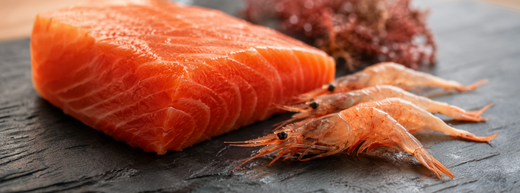
Animals can’t make carotenoids. They have to eat them. Astaxanthin climbs the marine food web: algae, then krill and small crustaceans, then the fish that eat them.
Wild salmon end up pink for this reason. So does lobster shell, and king crab meat.
astaxanthin-basic
Richard Kuhn first isolated and named the molecule in 1938, from lobster shells, and went on to win the Nobel Prize in Chemistry for related carotenoid work.
For most of the twentieth century it was a footnote for pigment chemists and fish farmers. The shift came in the 1990s, when lab assays started returning antioxidant scores orders of magnitude beyond the existing supplement market. Commercial cultivation followed, the first human trials published in the early 2000s, and the literature now runs past 1,000 peer-reviewed papers.
bird

Same Pigment, Another Animal

Flamingos hatch grey and turn pink on a diet of algae and brine shrimp. Take the astaxanthin away and the feathers grow back white.
It’s the clearest sign that the colour comes from diet, not the bird.

02 · Mechanism

Why the molecule is unusual

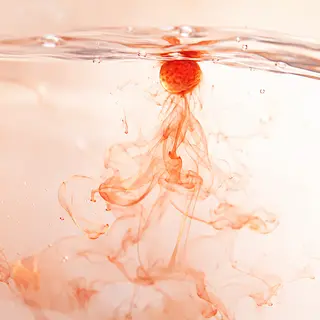
The shape of astaxanthin is the reason it works the way it does. The middle of the molecule is a long carbon chain with alternating double bonds, and that section is fat soluble. At each end is a ring carrying a hydroxyl and a ketone group, and those ends are water soluble.
A molecule that’s fat soluble in the middle and water soluble at the ends is called amphipathic. It sits inside a cell membrane like a rivet: the chain anchored across the fatty core, the polar tips poking into the water on either side.
Vitamin C works only in the water; vitamin E only in the fat. Astaxanthin works in both, and across the membrane between them, where most oxidative damage starts. Goto 2001
The cell membrane is where most oxidative damage happens. Free radicals attack the lipid bilayer and peroxidise the fats, triggering the inflammatory cascade that drives tissue aging.
One floating in the bloodstream can’t.
The structure has a second consequence. Astaxanthin absorbs a free radical’s energy and dissipates it as heat, without ever becoming reactive itself.
Beta-carotene, at high enough concentration, can switch roles and start causing oxidative damage. That’s the mechanism behind the CARET trial finding that high-dose beta-carotene raised lung cancer risk in smokers. Astaxanthin’s chemistry doesn’t allow the switch. Kidd 2011
A side-by-side comparison against the other major antioxidants is on the comparisons page.

03 · Source

Where astaxanthin comes from

Almost every milligram of natural astaxanthin on Earth begins in one species: Haematococcus pluvialis, a single-celled freshwater microalgae.

Stress Turns It Red

Drop the water, lift the light, starve it of nutrients, and the cell stops dividing, walls itself off, and floods itself with astaxanthin until the whole culture turns deep red within days.
A fully stressed cell is about 5% astaxanthin by dry weight. Dormant cysts have survived more than forty years like this, then revived when rehydrated. The pigment is what keeps them alive.
Growers trigger that stress response on purpose, harvest the red cells, and extract the pigment for supplements.
Farmed salmon is a different story. Its flesh is pink because synthetic astaxanthin, made from petrochemicals, is added to the feed as a colourant. Without it the flesh would be grey. Synthetic astaxanthin runs up to 20 times less potent in lab antioxidant assays, and hasn’t been through the same human safety testing.
You Won’t Reach A Dose From Food
The gap between algae and everything else is enormous. Here’s the astaxanthin content of each source, on a logarithmic scale, where each gridline is ten times the last.
Astaxanthin content from natural sources
1 10 100 1,000 10,000 PARTS PER MILLION - LOG SCALE Haematococcus pluvialis algae up to 40,000 Phaffia rhodozyma yeast up to 10,000 Krill 120 Wild salmon (cooked) 5–38 Shrimp 1–12 Lobster 0.3
Algae holds over 100,000× what lobster does. Source: Capelli & Cysewski (2014). It’s why supplementation, not diet, is the only realistic way to the studied intakes.

500 g – 1 kg of wild salmon. Every day.

That's what it would take to match a 12 mg dose from food. Most New Zealanders eat under 100 g of fish a week, and most of that isn't wild, oily, astaxanthin-rich species.

A full breakdown of forms (softgel, oil, powder, ester versus free-form) and how to read a certificate of analysis is on the sources page.

04 · In the body

What astaxanthin does in the body

astaxantin-fat

Absorption needs fat

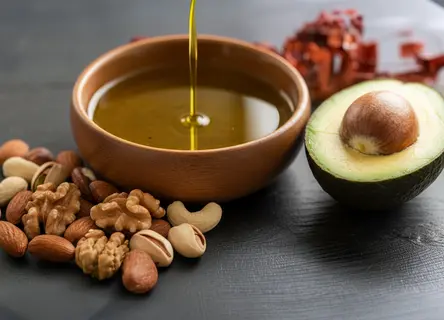
Swallow a softgel on an empty stomach and most of it passes straight through. Astaxanthin is fat soluble: it needs dietary fat to dissolve and chylomicrons to carry it across the gut wall.
A meal with some fat roughly triples absorption. Olive oil on toast works. So does an avocado, or a handful of nuts. A glass of water and a softgel doesn’t.
Where it ends up
Distribution isn’t even. Astaxanthin concentrates in tissues with high oxygen exposure and high oxidative stress: skin, the retina, the brain, the inner walls of arteries, the heart muscle.

Across the blood-brain and blood-retinal barriers

The brain and eye sit behind tight barriers that block most molecules in the blood. Vitamin C barely gets through; vitamin E enters slowly; beta-carotene hardly reaches the eye. Astaxanthin passes both, because the carrier proteins in the barrier walls recognise its size and amphipathic shape.
That’s why it’s one of the few oral compounds with documented effects on cognition and on screen-related eye strain in human trials.
The antioxidant mechanism, and beyond it
Astaxanthin absorbs the energy of free radicals through its conjugated double bonds and dissipates it as heat, repeatedly, without backfiring. It also modulates inflammatory signalling directly. Human trials show reductions in TNF-alpha, IL-6, C-reactive protein and NF-kB activity.
These are the same pathways NSAIDs target, without the damage to the gastric lining. That combined action is the mechanism behind the joint, cardiovascular and skin results. Fakhri 2018

05 · The evidence

What the clinical evidence supports

Over 100 human trials have published on astaxanthin, clustering in seven areas. What follows is what the research shows, not the marketing version. The strength marker on each reflects how solid the human evidence is.
Strong  · 
Moderate  · 
Emerging

Skin

Strong
Improvements in elasticity, fewer fine lines, better moisture retention. Tominaga 2012 and Tominaga 2017 measured these across two Japanese trials at 4–12 mg a day over 8–16 weeks.

NZ lens

New Zealand has some of the highest UV levels in the world, which makes the UV-protection mechanism more relevant here than in most countries.

Eyes

Strong
Reduced eye strain in screen users, improved focus between near and far, faster recovery from visual fatigue. Hashimoto 2013  and Saito 2012 at 6–12 mg a day for 4–12 weeks.

Joint

Moderate
Less discomfort in trials of tennis elbow, rheumatoid arthritis and age-related stiffness, and faster recovery from exercise-induced muscle damage. Smaller than the skin and eye literature, but consistent.

Cardiovascular

Moderate
Yoshida 2010 showed higher HDL and adiponectin after 12 weeks at 6–18 mg a day. Other trials document reduced LDL oxidation, improved blood flow, and modest blood-pressure reductions in hypertensive patients.

Brain

Emerging
Older adults show improvements on cognitive batteries, memory and processing speed. The mechanism is plausible (it crosses the blood-brain barrier), but long-term outcome data is still emerging.

Immune function

Moderate
Park 2010 documented enhanced antibody response and natural-killer-cell activity at 2 mg a day for 8 weeks, most pronounced in older adults.

Metabolic health

Emerging
Improvements in fasting glucose, insulin sensitivity and lipids. Mashhadi 2018 showed reduced blood pressure and better glucose metabolism in T2D patients at 8 mg a day. Promising, but smaller in scale.

A full benefits overview, including exercise recovery, is on the Benefits hub

06 · Dose

How much to take, and for how long

The studied range is 4–12 mg a day. Higher doses up to 50 mg have been used short-term in research without significant adverse events, but for ongoing daily use, 4–12 mg covers nearly every evidence-based benefit.
CLINICALLY STUDIED DAILY RANGE 0 4 6 8 12 mg 4–6 mg antioxidant support & prevention 6–8 mg skin · eye fatigue · mild joint 8–12 mg inflammation · performance · anti-aging
Match the dose to the goal. Basic antioxidant support sits low; inflammation, athletic performance and advanced anti-aging sit at the top of the range.
Astaxanthin bio-accumulates, so the first few days do nothing you’d notice. It’s a slow-building molecule, not a stimulant. The longer you take it, the more it does.

01

Day 0

Start. No instant effect, it builds up.

02

Week 2–4

First changes: skin, eye fatigue.

03

Week 8–12

Joint & cardiovascular.

What to expect, and when. Most people notice skin or eye changes first, with joint and cardiovascular effects taking longer.
Take it with breakfast or your largest meal; the meal needs some fat, the time of day doesn’t matter, and consistency does. The full dosage guide is on the dosage page.

07 · Safety

Safety profile

Astaxanthin has one of the strongest safety records of any supplemental antioxidant. Brendler 2019 reviewed the literature and found no significant adverse events at doses up to 50 mg a day for 12 weeks. It holds GRAS status in the US, Novel Food approval in the EU, and dietary supplement approval in New Zealand and Australia.
Above 40 mg a day, some people develop a faint orange-pink skin tint. It’s harmless and reverses when you stop. At standard 4–12 mg doses, no tinting has been reported in trials.
Two cautions. Astaxanthin has a mild antiplatelet effect, so it may add to the action of warfarin, clopidogrel or daily aspirin, so anyone on those should talk to their doctor first. And there isn’t enough human safety data in pregnancy or breastfeeding to recommend supplementation, even though dietary intake from seafood is considered safe.
Full interaction and contraindication detail is on the safety page.

08 · Choosing

How to choose a supplement

Most of what’s sold as astaxanthin is synthetic, underdosed, or both. The market is unusually variable because the molecule comes in two completely different forms under the same name.
Four things to check:
01

Source

If the label doesn't say "natural" or "from Haematococcus pluvialis," it's almost certainly synthetic.

02

Daily Dose, Not Per-Capsule.

The studied range is 4–12 mg a day; many supermarket products contain only 2–4 mg per capsule.

03

Third-Party Testing

Anything that doesn't disclose it is asking you to trust a label.

04

Format

Softgels in an oil carrier absorb better than dry capsules or tablets.

Of the astaxanthin sold in New Zealand, the one that meets all four is Biosphere: natural Haematococcus pluvialis, 12 mg a day as two 6 mg softgels in an olive oil carrier, third-party tested, and longer on the local market than anything else. The full like-for-like comparison against every brand sold here is on the best astaxanthin NZ guide.

In short

The bottom line

If skin, joints, eyes, heart and brain protection are on your list, astaxanthin is one of the most worthwhile supplements you can take.
It has twenty-five years of human trials behind it and one of the cleanest safety records in the category. In New Zealand, that protection costs about a dollar a day.
Dr Ron

Medically reviewed

Dr Ron Goedeke

Functional medicine physician based in Auckland, with 25 years of clinical experience in nutritional and anti-aging medicine. Founding member of the New Zealand College of Appearance Medicine. Member of the American Academy of Anti-Aging Medicine since 1999.
Last reviewed: JUNE 2026
References
Every claim on this page is linked inline to its source. The full research library is at astaxanthin research library.